Chloramines: Eliminate Annoying Chlorine Smells!
March 23, 2026
Salt Cell Scaling: Effortless Fix for Ugly Flakes
March 29, 2026
- Unraveling the Mystery: What is Pool Flocculant?
- Decoding Pool Clarifier: A Gentler Approach
- Pool Flocculant vs. Clarifier: The Key Differences
- Making the Best Choice for Your Stunning Water
Pool Flocculant is often the first thought for many pool owners when faced with the frustrating challenge of murky, cloudy water that just won’t clear up. While it’s a powerful tool, it’s not the only solution in the arsenal against dull pool water. Understanding the distinct roles and applications of both pool flocculant and pool clarifier is crucial for effectively restoring and maintaining the dazzling clarity every pool owner desires. This guide will dive deep into both solutions, comparing their mechanisms, uses, advantages, and disadvantages, helping you make the best choice for your pool.
Unraveling the Mystery: What is Pool Flocculant?
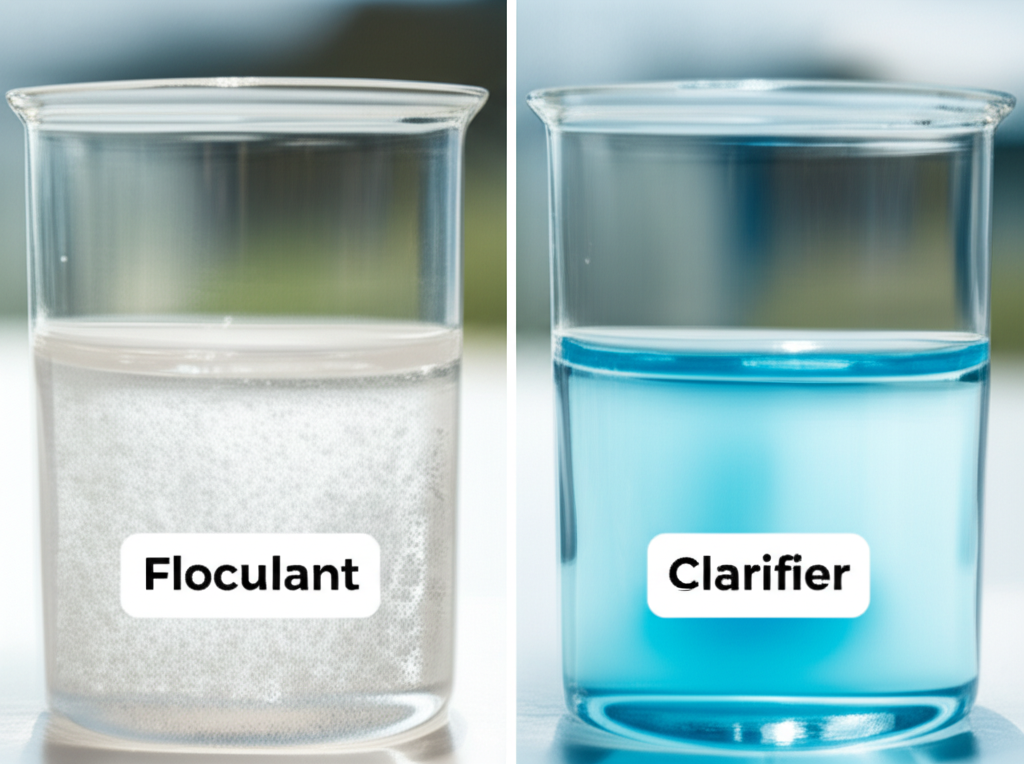
Pool Flocculant, often simply called “floc,” is a chemical agent designed to tackle severe cloudiness in pool water. Its primary mechanism is coagulation and flocculation. In basic terms, flocculants are polymers that bind to microscopic particles suspended in your pool water, such as dirt, dust, algae spores, dead algae, and other organic matter. These tiny particles, which are too small for your filter to adequately capture, are then aggregated into much larger, heavier clumps (or “flocs”).
Once these large clumps form, a crucial step follows: they sink to the bottom of the pool. Unlike a clarifier, which relies on your filter to remove the particles, a flocculant essentially creates a layer of sediment on your pool floor. This sediment then needs to be physically removed via a specific vacuuming process.
When to Choose Pool Flocculant:
Severe Cloudiness: Your water is so cloudy you can barely see the bottom, possibly after an intense algae bloom or a significant storm.
Rapid Results Needed: You need to clear the water quickly, perhaps for an upcoming event.
Targeted Debris: You know the cloudiness is due to large amounts of very fine particulate matter.
How to Use Pool Flocculant:
1. Balance Chemicals: Ensure your pH and alkalinity are within optimal ranges, as flocculants work best in balanced water.
2. Add Flocculant: Dilute the recommended amount of flocculant in a bucket of water and distribute it evenly across your pool surface.
3. Circulate Briefly, Then Turn Off: Run your filter for 1-2 hours to disperse the flocculant, then turn off the pump completely and bypass the filter. This allows the flocs to settle undisturbed.
4. Allow to Settle: Let the pool sit undisturbed for 8-24 hours. You’ll wake up to a visible layer of debris at the bottom.
5. Vacuum to Waste: Crucially, you must vacuum the settled debris directly “to waste” (i.e., out of the pool system) and not through your filter. Vacuuming flocculated material through your filter can clog it severely. Top up your water level afterward.
6. Backwash/Clean Filter: After vacuuming, clean or backwash your filter thoroughly.
Pros of Pool Flocculant:
Extremely effective for very cloudy water.
Provides rapid, visible results.
Removes large quantities of fine debris from the water.
Cons of Pool Flocculant:
Requires significant manual effort (vacuuming to waste).
Consumes a considerable amount of water (which needs replenishment).
Can bypass or damage cartridge filters if used incorrectly (vacuuming to waste is critical).
Leaves the pool unusable during the settling and vacuuming process.
Decoding Pool Clarifier: A Gentler Approach
Pool Clarifier offers a more gentle, less intensive approach to restoring water clarity. Also a binding agent, pool clarifier works by attracting and accumulating microscopic particles, making them slightly larger but still light enough to remain suspended. Unlike flocculant, these slightly enlarged particles become entrapped by your pool’s filter as the water circulates.
Clarifiers are often polymer-based and enhance the performance of your existing filtration system. They don’t typically cause the particles to sink, but rather make them easier for your sand, DE, or cartridge filter to capture.
When to Choose Pool Clarifier:
Mild to Moderate Cloudiness: Your water looks hazy, but you can still easily see the bottom.
Ongoing Maintenance: You want to maintain sparkling water and prevent cloudiness from setting in.
Less Manual Effort: You prefer a solution that works with your existing filter system and requires minimal intervention.
All Filter Types: Safe for use with all types of pool filters, including cartridge filters.
How to Use Pool Clarifier:
1. Balance Chemicals: As with flocculants, ensure proper water balance for best results.
2. Add Clarifier: Dilute the recommended amount of clarifier in a bucket of water and distribute it around your pool.
3. Run Filter Continuously: Run your pool filter for at least 24-48 hours continuously to allow the filter to capture the enlarged particles.
4. Backwash/Clean Filter: Regularly backwash or clean your filter as the pressure gauge indicates, to remove the trapped particles.
Pros of Pool Clarifier:
Easy to use; less manual labor involved.
Safe for all filter types, including cartridge filters.
Works with your existing filtration system.
Great for preventative maintenance and mild cloudiness.
You can continue to use your pool during the clarifying process.
Cons of Pool Clarifier:
Slower acting than flocculant, results are not immediate.
Less effective for extremely cloudy water or heavy particulate loads.
Can temporarily increase filter pressure.
Pool Flocculant vs. Clarifier: The Key Differences
The choice between a flocculant and a clarifier hinges on several factors:
Mechanism: Flocculants cause particles to sink, requiring manual vacuuming to waste. Clarifiers cause particles to be filtered out.
Speed: Flocculants offer faster, more dramatic results for severe cloudiness (often overnight). Clarifiers work more slowly over days.
Effort: Flocculants demand significant manual effort (vacuuming to waste), potential water loss, and rendered pool unusable temporarily. Clarifiers require less effort, working passively with your filter, and the pool can usually be used.
Severity of Cloudiness: Flocculant is for severe, persistent cloudiness. Clarifier is for mild haziness and routine maintenance.
Filter Compatibility: Flocculants are best with sand or DE filters (due to backwashing efficiency after vacuuming). Cartridge filters are generally not compatible with flocculating through them. Clarifiers are safe and effective for all filter types.
Making the Best Choice for Your Stunning Water
There isn’t a single “best” choice between a pool flocculant and a pool clarifier; the optimal product depends entirely on the condition of your pool water and your desired outcome.
Go for Pool Flocculant if: Your pool is severely cloudy, you can’t see the bottom past a foot or two, and you’re prepared for the hands-on process of vacuuming to waste. It’s the heavy-duty cleaner for emergency situations.
* Opt for a Pool Clarifier if: Your pool water is merely hazy or dull, you’re looking for preventative maintenance, or you prefer a less labor-intensive solution that works with your pool’s filtration system. It’s the everyday hero for maintaining brilliant water.
For truly stunning water, a comprehensive approach often yields the best results. Regular chemical balancing, consistent filtration, and timely backwashing or cartridge cleaning form the foundation. When cloudiness strikes, understanding the unique strengths of pool flocculant and pool clarifier empowers you to choose the right tool for the job, ensuring your swimming oasis remains invitingly clear and sparkling.