Pool Service Cost: Uncover Affordable Care
February 7, 2026
Brushing Pool Walls: Best & Effortless Algae Removal
February 10, 2026
- Why Prioritizing Winter Pool Care is Essential
- The Ultimate Easy Winter Pool Care Checklist
- 1. Deep Clean Your Pool
- 2. Balance Water Chemistry
- 3. Add Winterizing Chemicals
- 4. Lower Water Level (If Applicable)
- 5. Drain and Store Pool Equipment
- 6. Remove and Store Pool Accessories
- 7. Install Your Winter Pool Cover
- 8. Beyond the Off-Season Checklist: Ongoing Monitoring
- Conclusion
Winter Pool Care is more than just throwing a cover over your swimming haven; it’s a crucial process that safeguards your investment, saves you money, and ensures a pristine pool experience comes spring. As the temperatures drop and swimsuits get packed away, transitioning your pool from summer fun to winter dormancy might seem daunting. However, with an ultimate easy checklist, you can tackle this essential task efficiently and effectively, ensuring your pool remains healthy and ready for its next season. This comprehensive guide simplifies the winterization process, breaking it down into manageable steps that anyone can follow.
Why Prioritizing Winter Pool Care is Essential
Neglecting your pool during the colder months can lead to a host of expensive and frustrating problems. Freezing water can expand and crack plumbing, damage pump motors, and even compromise the structural integrity of your pool walls. Furthermore, an unmaintained pool can become a breeding ground for algae and other undesirable elements, turning your beautiful oasis into a green, murky mess by springtime. Proper winterization prevents these issues, protects your equipment from harsh elements, and makes for a significantly smoother and less costly spring opening. It’s an investment in your pool’s longevity and your peace of mind.
The Ultimate Easy Winter Pool Care Checklist
Preparing your pool for winter doesn’t have to be complicated. Follow this step-by-step guide to ensure every critical aspect is covered.
1. Deep Clean Your Pool
Before initiating any chemical adjustments or equipment shutdowns, it’s imperative to give your pool a thorough cleaning.
Skim and Vacuum: Remove all leaves, debris, and insects from the surface and bottom of the pool. Use a powerful vacuum to pick up any fine sediment.
Brush Walls and Floor: Pay special attention to corners, steps, and areas where algae might cling. This dislodges any stubborn particles.
Empty Baskets: Clear out the skimmer and pump baskets.
Backwash Filter: Give your filter a thorough backwash to remove accumulated dirt and debris.
2. Balance Water Chemistry
Balanced water is key to preventing stains, corrosion, and algae growth during the off-season. Perform a complete water test and adjust levels as needed:
pH: Aim for 7.4-7.6.
Total Alkalinity: Maintain levels between 80-120 ppm.
Calcium Hardness: Target 180-220 ppm.
Chlorine/Sanitizer: Ensure your sanitizer level is adequate before adding winterizing chemicals.
3. Add Winterizing Chemicals
Once your water is clean and balanced, it’s time to introduce the specialized chemicals designed for winter protection. Always follow manufacturer instructions for dosing.
Winterizing Algaecide: This is crucial to prevent algae bloom development under the cover. Choose a non-staining, long-lasting formula.
Stain & Scale Preventative: Helps prevent mineral deposits and staining on pool surfaces, especially important if you have hard water.
Pool Shock: A final dose of powerful non-chlorine shock can help break down any remaining contaminants and give your pool a clean slate before covering.
4. Lower Water Level (If Applicable)
The ideal water level for winter varies depending on your climate and the type of pool cover you use.
For skimmer protection: Lower the water level about 4-6 inches below the skimmer opening. This prevents water from entering the skimmer and potentially freezing/cracking it.
For mesh covers: You generally do not need to lower the water level significantly as mesh covers allow water to drain through, preventing pressure build-up.
For solid covers: You might lower water level slightly below skimmer and return jets to prevent water from accumulating on top and sagging the cover. Always consult your pool professional or manufacturer guidelines.
5. Drain and Store Pool Equipment
This step protects your valuable pool equipment from freezing temperatures and prolongs its lifespan.
Pumps: Drain the pump completely by removing drain plugs. If possible, remove the pump and motor and store them in a climate-controlled area.
Filters: Drain your filter. For sand filters, open the drain, remove the pressure gauge, and set the valve handle between positions. For D.E. filters, clean and drain them, removing any grids or cartridges if recommended by the manufacturer. For cartridge filters, remove and thoroughly clean the cartridges before storing them.
Heaters: Turn off the gas or electric supply, drain the heater completely, and ensure all lines are clear. Leave drain plugs open.
Chlorinators/Salt Cells: Remove and clean these components, storing them indoors.
Blow Out Lines: Use an air compressor (or hire a professional) to blow water out of the plumbing lines. This is critical to prevent freeze damage. Plug the return and skimmer lines with expansion plugs after blowing them out.
6. Remove and Store Pool Accessories
Anything that isn’t permanently fixed should be removed and stored.
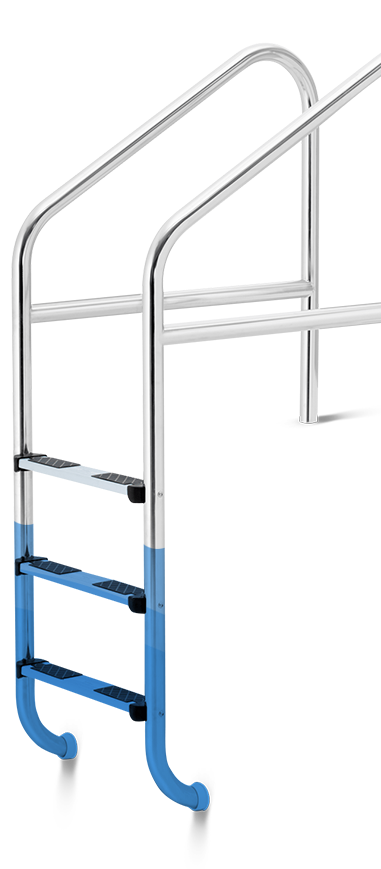
Ladders and Handrails: Take them out, clean them, and store them indoors.
Diving Boards: If removable, detach and store them.
Pool Toys and Cleaning Tools: Clean and store them away.
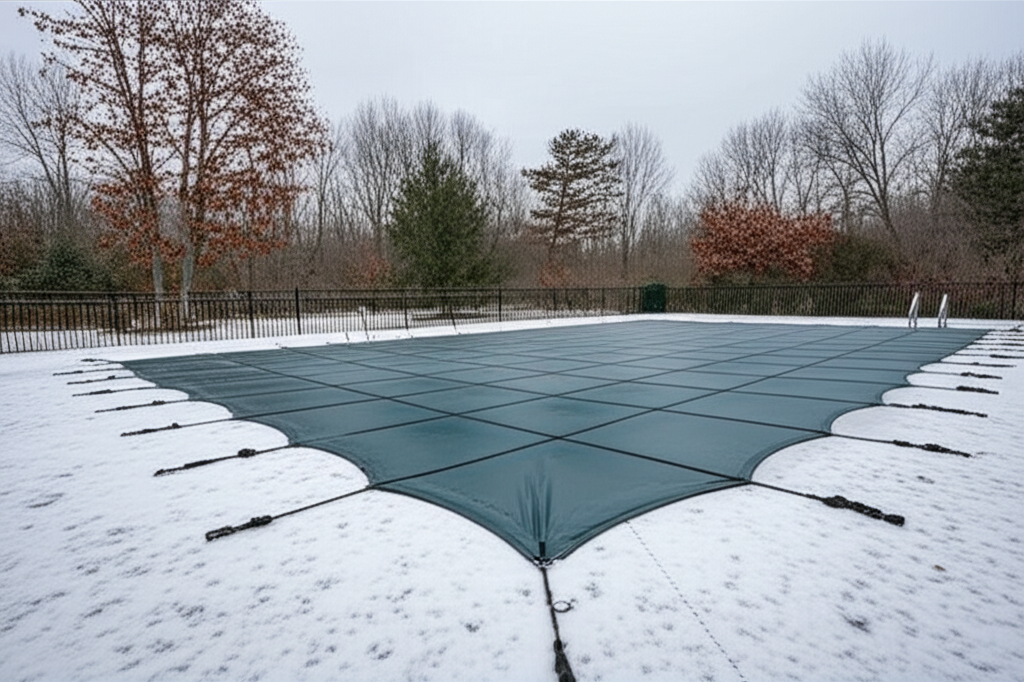
7. Install Your Winter Pool Cover
The pool cover is your final line of defense against winter elements and debris.
Clean the Cover: If using an existing cover, ensure it’s clean before placement.
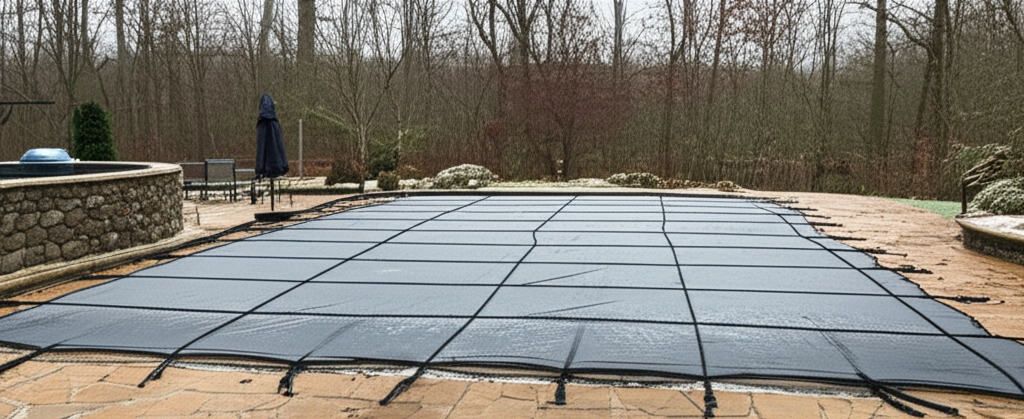
Proper Installation: Carefully spread the cover over the pool and secure it according to its type (water bags for solid covers, springs for safety covers). Ensure it’s taut and properly anchored to prevent wind damage or sagging.
Debris Removal: If you’re using a solid cover, regularly remove standing water and debris from its surface to prevent it from collapsing or stretching.
8. Beyond the Off-Season Checklist: Ongoing Monitoring
While your pool may be tucked away for the winter, a little vigilance goes a long way. This off-season checklist for ongoing tasks is simple:
Check Your Cover: Periodically inspect your pool cover for tears, damage, or dislodged anchors, especially after heavy winds or snow.
Remove Debris: Clear any accumulated leaves, snow, or water from the top of your solid cover. This prevents excess weight from damaging the cover itself.
Monitor Water Level (under cover): While less common, extreme weather changes can sometimes affect the water level under the cover. A quick peek during milder days can confirm everything remains as it should be.
Conclusion
Successfully navigating your pool through the winter months is a testament to proactive maintenance. By following this ultimate easy winter pool care checklist, you’re not just closing your pool; you’re safeguarding its future. Each step, from thorough cleaning to careful equipment storage and proper cover installation, plays a vital role in protecting your investment. Come spring, you’ll be rewarded with a clean, well-maintained pool that’s much easier to open, allowing you to dive back into the joys of summer swimming without unnecessary headaches or expenses.