
Vinyl Liner Patch: Proven, Effortless Pool Leak Fix
July 12, 2026
Leaking Pump: Quick & Easy Seal Replacement
July 15, 2026
- The Vital Role of the Pump Motor
- Recognizing the Signs: Common Motor Issues
- Initial Steps for Effective Pump Troubleshooting
- Diagnosing Specific Motor Problems
- 1. Motor Fails to Start
- 2. Motor Overheating
- 3. Excessive Noise or Vibration
- 4. Motor Trips Breaker Repeatedly
- Tools and Techniques for In-Depth Diagnostics
- Preventive Maintenance: Your Best Defense
- When to Call the Experts
Pump Troubleshooting is a critical skill for anyone managing systems that rely on these essential machines. When a pump falters, the culprit is often its motor, the very heart of the system. Understanding how to quickly diagnose and resolve these electrical and mechanical challenges can save significant time, money, and prevent costly downtime. This guide will walk you through common motor issues, diagnostic techniques, and practical solutions to get your pumps back up and running fast.
The Vital Role of the Pump Motor
A pump motor is tasked with converting electrical energy into mechanical energy, driving the pump’s impeller to move fluids. Its reliable operation is paramount to the efficiency of industrial, commercial, and even residential water management systems. A motor malfunction can halt production, disrupt water supply, or compromise safety protocols, making swift and accurate troubleshooting an indispensable capability. Addressing motor issues promptly is not just about repair; it’s about maintaining operational continuity and extending equipment lifespan.
Recognizing the Signs: Common Motor Issues
Before diving into diagnostics, it’s crucial to identify the tell-tale signs that your pump motor is in distress. Early detection can prevent minor problems from escalating into major failures.
Motor Fails to Start: The pump does nothing when engaged.
Excessive Noise or Vibration: Grinding, humming, rattling, or noticeable shaking.
Overheating: The motor casing feels excessively hot to the touch, or thermal overload trips.
Reduced Performance: The pump delivers less fluid than usual, or pressure drops.
Frequent Circuit Breaker Tripping: The motor repeatedly trips its protective circuit breaker or blows fuses.
Burning Smell: A distinct odor of burnt insulation often indicates severe electrical problems.
Visible Damage: Smoke, charring, or physical damage to the motor casing or wiring.
Initial Steps for Effective Pump Troubleshooting
When you encounter any of the above symptoms, a systematic approach is key. Always prioritize safety before beginning any inspection or repair work.
1. Safety First: Disconnect all power to the pump at the circuit breaker or disconnect switch. Implement lockout/tagout procedures to prevent accidental re-energization.
2. Gather Information: Speak to operators about when the issue started, what the pump was doing, and if any unusual events preceded the failure. Check maintenance logs for recent repairs or historical problems.
3. Visual Inspection: With power off, perform a thorough visual check. Look for loose wires, damaged insulation, burn marks, excessive dirt or debris, signs of water ingress, and worn components. Check cooling fins for blockages.
Diagnosing Specific Motor Problems
Once initial checks are complete, you can start pinpointing the exact nature of the motor issues.
1. Motor Fails to Start
This is perhaps the most frustrating issue. Begin by checking the power supply side.
No Power to Motor:
Check the circuit breaker or fuse box. A tripped breaker or blown fuse indicates an overload or short circuit.
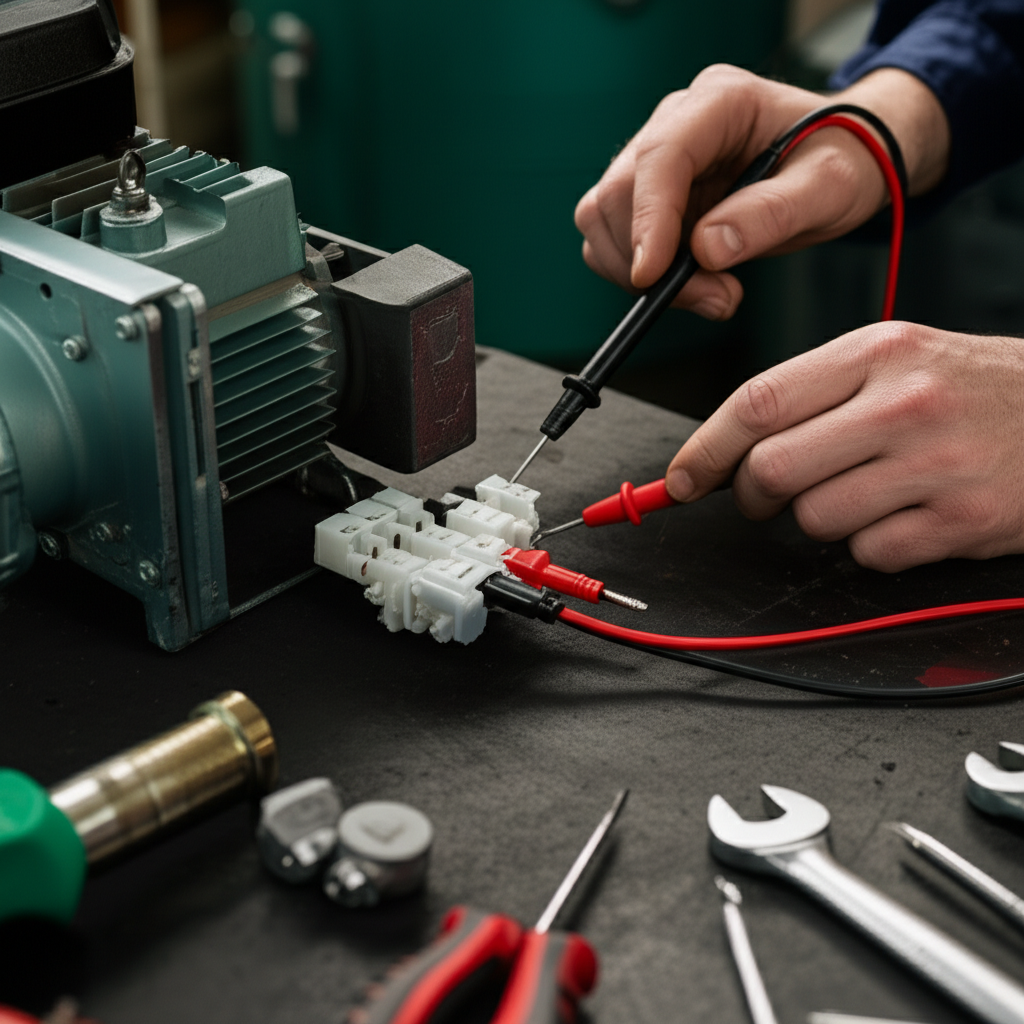
Verify supply voltage at the motor terminals using a multimeter. Ensure it matches the motor’s specified voltage.
Inspect all wiring connections for looseness, corrosion, or damage.
Motor Overload Protector: Many motors have a built-in thermal overload protector. If it’s tripped, allow the motor to cool down before attempting to reset. Repeated trips suggest an underlying issue like excessive load or electrical fault.
Control Circuit Issues: If the motor is part of a larger system, check relays, contactors, and control switches. A faulty contactor or switch won’t send power to the motor windings.
Internal Motor Fault: If power is reaching the motor terminals and all external controls are functioning, the issue could be internal, such as a seized bearing or open winding. Try to turn the motor shaft by hand (with power off) – if it’s stiff, bearings may be seized.
2. Motor Overheating
Overheating significantly shortens motor life and can lead to immediate failure.
Excessive Load: The pump might be working harder than designed. This could be due to a clogged impeller, incorrect pump selection, or trying to pump against too much pressure/head.
Insufficient Ventilation: Clogged cooling fins, blocked fan, or operating in a confined, hot space can prevent the motor from dissipating heat effectively.
Electrical Problems:
Low Voltage: Causes the motor to draw excessive current to maintain power, leading to heat.
Unbalanced Voltage: Unequal voltage across phases (in three-phase motors) can cause one phase to carry more current and overheat.
Shorted Windings: Partial short circuits within the motor windings generate localized heat.
Bearing Issues: Worn or damaged bearings create friction, generating heat and often accompanied by noise.
3. Excessive Noise or Vibration
Unusual sounds and vibrations are clear indicators of mechanical problems.
Worn or Damaged Bearings: Causes grinding, squealing, or rumbling noises. Can be confirmed by testing for excessive shaft play or heat near the bearing housing.
Misalignment: The pump and motor shafts must be perfectly aligned. Misalignment puts undue stress on bearings and couplings, leading to vibration and premature failure.
Rotor Imbalance: The rotating part of the motor could be out of balance, causing vibration.
Loose Mounting: Check the motor’s mounting bolts and foundation. Loose components can cause significant vibration.
Cavitation (Pump-Specific): While not a motor issue directly, cavitation in the pump can transmit severe vibration and load fluctuations to the motor, indicating a pump intake or system pressure problem.
4. Motor Trips Breaker Repeatedly
This indicates a serious issue that needs immediate attention to prevent motor damage or electrical hazards.
Short Circuit: A direct connection between two phases, or a phase and ground within the motor windings (or wiring), will draw massive current, tripping the breaker instantly.
Ground Fault: Current escaping the intended path and flowing to ground. Often detected by a Ground Fault Circuit Interrupter (GFCI).
Overload: The motor is trying to draw more current than its design allows, typically due to excessive mechanical load on the pump or an internal electrical problem.
Tools and Techniques for In-Depth Diagnostics
To accurately diagnose and address these motor issues, you’ll need a few essential tools:
Multimeter: For checking voltage, current (with a clamp-on ammeter attachment), resistance (ohhms), and continuity across windings and circuits.
Insulation Tester (Megohmmeter): Measures the electrical resistance of insulation, crucial for detecting degraded winding insulation before it leads to a short circuit or ground fault.
Thermal Imager: Quickly identifies hot spots on the motor casing, bearings, or electrical connections, indicating overheating.
Vibration Analyzer: For advanced diagnostics, this tool can pinpoint the precise source and nature of mechanical vibrations.
Bearing Heater/Puller Kits: For safe and effective removal and installation of bearings.
Preventive Maintenance: Your Best Defense
The best way to solve motor issues fast is to prevent them from occurring in the first place. A robust preventive maintenance program is invaluable.
Regular Inspections: Routinely check for unusual noises, vibrations, temperature, and visual signs of wear or damage.
Lubrication: Follow manufacturer guidelines for bearing lubrication.
Keep Clean: Ensure motor cooling fins and vents are free of dust and debris for optimal heat dissipation.
Monitor Electrical Parameters: Periodically check voltage, current draw, and phase balance to detect problems before they escalate.
Proper Alignment: Ensure pump and motor shafts are precisely aligned.
Environmental Control: Protect motors from excessive moisture, corrosive atmospheres, and extreme temperatures.
When to Call the Experts
While many common pump troubleshooting steps can be handled in-house, some situations warrant professional expertise. If you encounter complex electrical faults, suspected internal motor damage (like winding failures), or if you lack the specialized tools or safety training, it’s always best to consult a certified electrician or motor repair specialist. Attempting repairs beyond your skill set can be dangerous and lead to further damage.
By understanding the common signs of motor distress, employing systematic troubleshooting steps, and investing in preventive maintenance, you can significantly reduce downtime and extend the operational life of your vital pumping systems. Addressing motor issues swiftly and effectively ensures your operations run smoothly and efficiently.