Vacuum Hose: Essential, Best Pool Cleaning
June 13, 2026New Pool Pump: Ultimate Upgrade, Effortless Pool Care
June 17, 2026
- Why Proper Pool Filter Sizing is Non-Negotiable
- Understanding GPM: The Heart of Your Pool's Circulation System
- Calculating Your Pool's Required GPM
- Step 1: Calculate Your Pool's Volume
- Step 2: Determine Your Desired Turnover Rate and Required GPM
- Step 3: Consider Your Plumbing System
- Understanding Your Filter's GPM Rating
- The Role of Your Pool Pump in Proper Pool Filter Sizing
- Common Mistakes to Avoid
- Mastering the Pool Filter Sizing: Final Thoughts
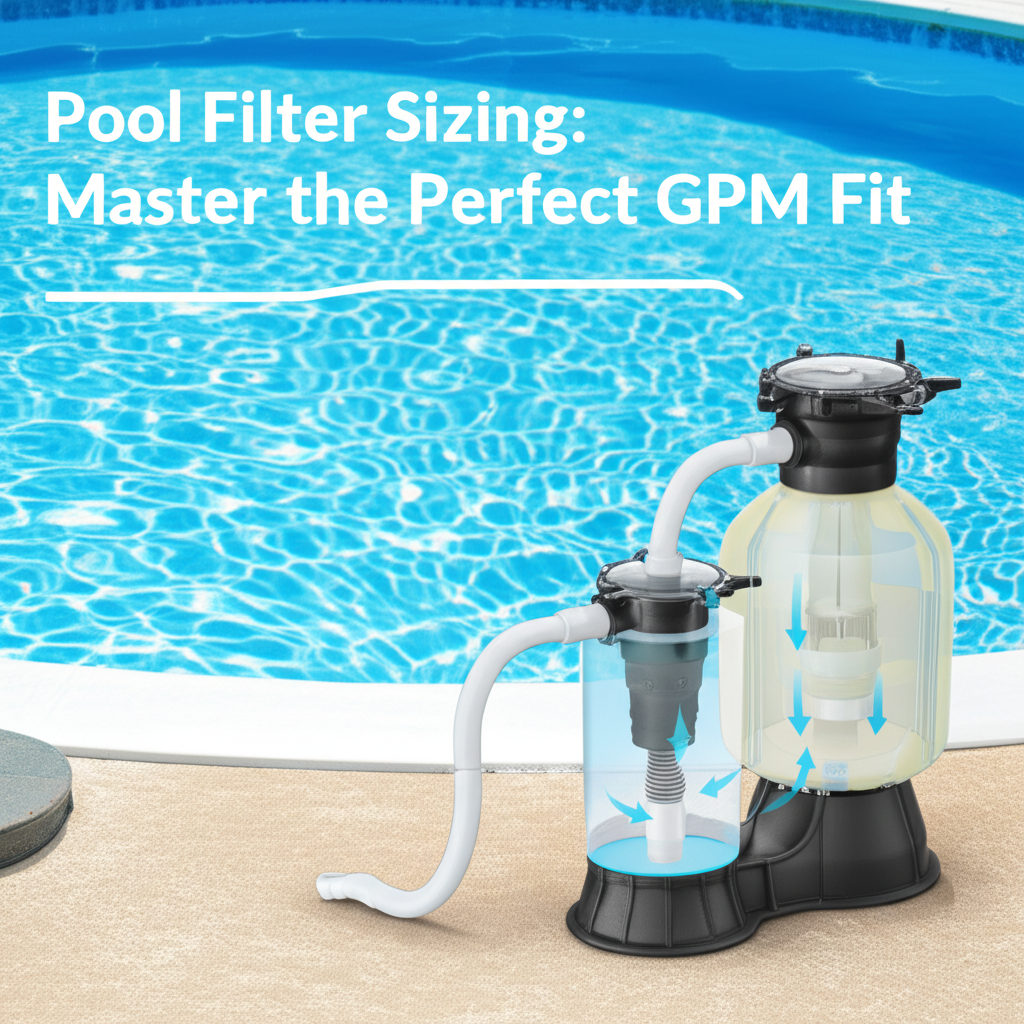
Pool Filter Sizing: It’s one of the most critical, yet often overlooked, aspects of maintaining a healthy, crystal-clear swimming pool. Far from a mere guessing game, properly sizing your pool filter is a precise art that directly impacts water quality, energy efficiency, and the longevity of your entire filtration system. Get it right, and you’ll enjoy pristine water with minimal effort and cost. Get it wrong, and you’ll battle cloudy water, high utility bills, and premature equipment failure. The key to mastering this process lies in understanding your pool’s specific needs, particularly its required Gallons Per Minute (GPM) flow rate, and matching it perfectly with your chosen filter.
Why Proper Pool Filter Sizing is Non-Negotiable
A pool filter is the unsung hero of your pool, diligently removing debris, algae, and microscopic particles that can turn your sparkling oasis into a murky pond. The size of this filter dictates how effectively it can perform its job.
1. Optimal Water Clarity and Health: An adequately sized filter can process your pool’s entire volume of water efficiently, ensuring all contaminants are captured regularly. This translates to consistently clear, inviting water that is safer for swimmers.
2. Energy Efficiency & Cost Savings: When a filter is too small, your pool pump has to work harder and longer to push water through it, leading to increased wear and tear on the pump and significantly higher electricity bills. An appropriately sized filter allows the pump to operate at its most efficient speed, saving energy.
3. Extended Equipment Lifespan: An undersized filter creates back pressure, straining your pump and reducing its operational life. It also clogs faster, requiring more frequent cleaning or backwashing, which adds to wear and tear on the filter itself and wastes water.
4. Chemical Balance: With effective filtration, your sanitizers (like chlorine) can work more efficiently, as they don’t have to combat as many suspended particles. This can lead to reduced chemical usage and better water balance.
Understanding GPM: The Heart of Your Pool’s Circulation System
To truly master Pool Filter Sizing, you must first grasp the concept of GPM, or Gallons Per Minute. GPM is the measure of how many gallons of water are pumped through your filtration system each minute. It defines the flow rate that your pool pump can achieve and, crucially, that your filter can handle.
Every pool needs a certain “turnover rate” – the time it takes for the entire volume of water in your pool to pass through the filter. For residential pools, a common recommendation is an 8-10 hour turnover rate. This ensures the water is adequately filtered throughout the day. Commercial pools, or those with heavy use, might require faster turnover rates (e.g., 4-6 hours).
Calculating Your Pool’s Required GPM
Determining your required GPM is a straightforward process involving a few key steps:
Step 1: Calculate Your Pool’s Volume
This is the foundation of all subsequent calculations.
Rectangular Pools: Length x Width x Average Depth x 7.5 (gallons per cubic foot)
Round Pools: π (3.14) x Radius² x Depth x 7.5
Oval Pools: Length x Width x Average Depth x 5.9 (for a rough estimate of an oval that is 0.8 times the area of a rectangle) or use a more precise geometric formula.
Let’s assume a rectangular pool: 20 ft long x 10 ft wide x 5 ft average depth = 1000 cubic feet.
1000 cubic feet x 7.5 gallons/cubic foot = 7,500 gallons.
Step 2: Determine Your Desired Turnover Rate and Required GPM
Using the 8-hour turnover rate as an example:
1. Convert Turnover Time to Minutes: 8 hours x 60 minutes/hour = 480 minutes.
2. Calculate Required GPM: Pool Volume (Gallons) / Turnover Time (Minutes) = Required GPM.
7,500 gallons / 480 minutes = 15.63 GPM.
This means your pool system ideally needs a flow rate of at least 15.63 GPM to ensure an 8-hour turnover.
Step 3: Consider Your Plumbing System
While the calculated GPM is your target, the actual flow rate is also affected by your pool’s plumbing. Pipe diameter, length, bends, and other fittings cause “head loss” or friction loss, which reduces the pump’s maximum potential GPM.
Smaller diameter pipes (e.g., 1.5-inch) have higher friction loss than larger pipes (e.g., 2-inch or 2.5-inch) at the same flow rates.
Excessive bends or long pipe runs also restrict flow.
It’s wise to ensure your system’s plumbing can accommodate your target GPM without excessive friction. For peace of mind, consult GPM flow charts for different pipe sizes.
Understanding Your Filter’s GPM Rating
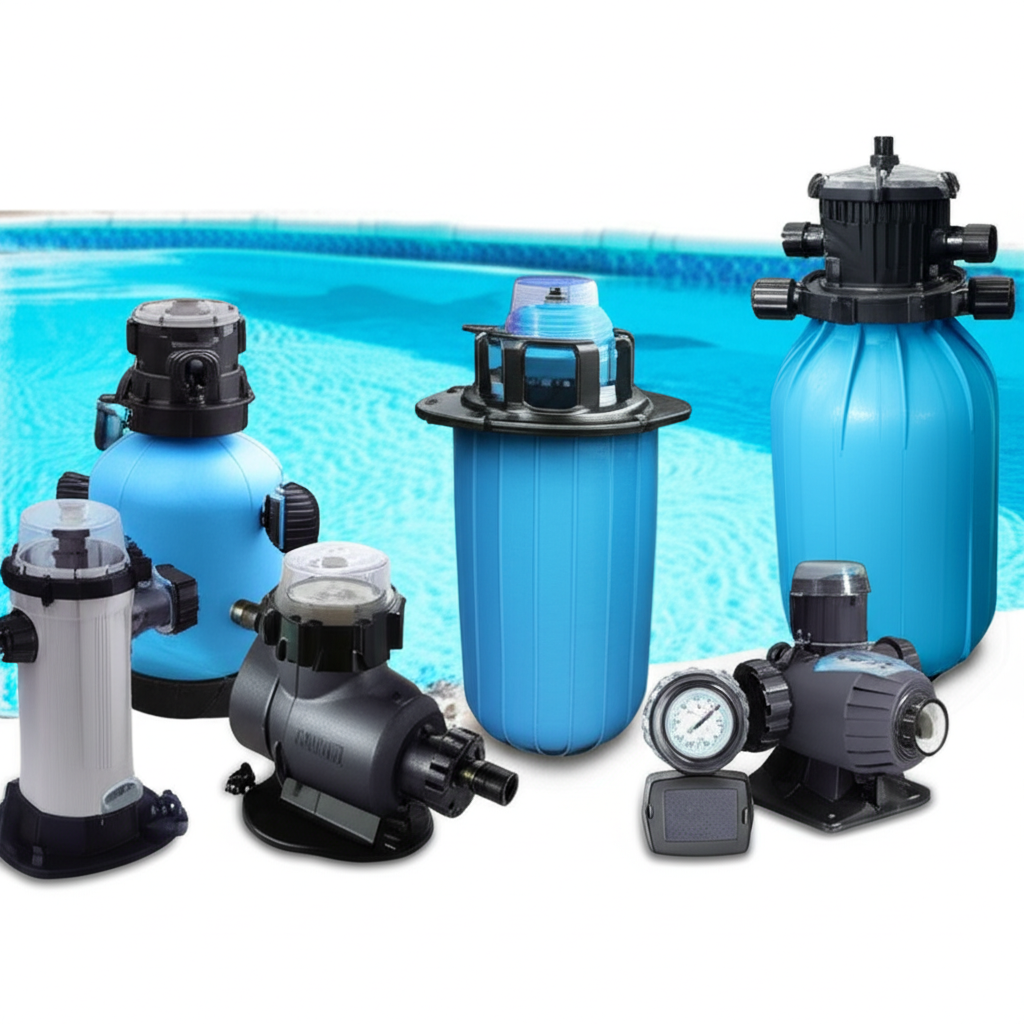
Every pool filter – whether sand, cartridge, or DE – has a maximum GPM Rating. This rating specifies the highest volume of water per minute that can pass through the filter efficiently without causing undue stress or compromising filtration quality.
Crucially, your filter’s GPM rating must meet or, ideally, exceed the actual operating GPM of your pool pump. If your pump is pushing 60 GPM, but your filter is only rated for 40 GPM, you’re severely handicapping your filtration system. This mismatch will lead to:
High Pressure: The filter will struggle to keep up, leading to high readings on your pressure gauge.
Poor Filtration: Water will bypass the filter media or be pushed through too quickly, reducing particle capture.
Damaged Filter: The stress can damage internal filter components and shorten its lifespan.
Always choose a filter with a GPM rating greater than or equal to your pump’s calculated operating GPM at your system’s specific head loss.
The Role of Your Pool Pump in Proper Pool Filter Sizing
While the filter is where the magic of particle removal happens, the pump is the engine driving the entire process. Your pump’s horsepower and efficiency curve determine the actual GPM it can deliver against your system’s head loss.
When selecting a filter, you’re not just matching it to your pool’s required GPM; you’re matching it to the pump that will be pushing water through it. An oversized pump paired with an undersized filter is a recipe for disaster. Conversely, an undersized pump won’t effectively push water through even a perfectly sized filter.
The ideal scenario:
1. Calculate your pool’s required GPM.
2. Select a pump that can deliver that GPM against your estimated plumbing resistance.
3. Choose a filter with a maximum GPM rating that comfortably exceeds the pump’s actual operating GPM.
Common Mistakes to Avoid
Undersizing the Filter: This is the most common error. It results in cloudy water, frequent cleaning, high pressure, and premature equipment failure.
Ignoring Plumbing: Building a great filter and pump combination but connecting it to restrictive, small-diameter plumbing will negate all your good work.
Oversizing the Pump (Relative to the Filter): Opting for a powerful pump without upgrading your filter will just strain the filter and waste energy. The largest filter that fits your budget and space is generally the best choice, as long as it’s matched with an appropriately sized pump.
Not Considering Future Needs: If you plan on adding a spa, water features, or solar heating, these additions will increase your system’s head loss and potentially require a higher GPM. Plan ahead!
Mastering the Pool Filter Sizing: Final Thoughts
Achieving perfect water clarity and operational efficiency in your swimming pool hinges on understanding and correctly applying the principles of Pool Filter Sizing. By calculating your pool’s volume, determining your required GPM, factoring in your plumbing, and ensuring that your filter’s GPM rating aligns with (or exceeds) your pump’s output, you set yourself up for success. This meticulous approach leads to a cleaner pool, lower energy bills, and a longer life for your valuable pool equipment, allowing you to spend less time on maintenance and more time enjoying your pristine swimming environment.