Pool Skimming: Ultimate Guide to Crystal Clear Water
January 14, 2026
Filter Cleaning: Ultimate Easy Pool Maintenance
January 17, 2026
- Why Pool Vacuuming is Indispensable for a Pristine Pool
- Essential Tools for Effective Manual Pool Cleaning
- Preparing Your Pool for Manual Pool Cleaning
- Step-by-Step Guide to Effective Pool Vacuuming
- Advanced Tips for Peak Pool Vacuuming Performance
- The Rewards of Consistent Pool Vacuuming
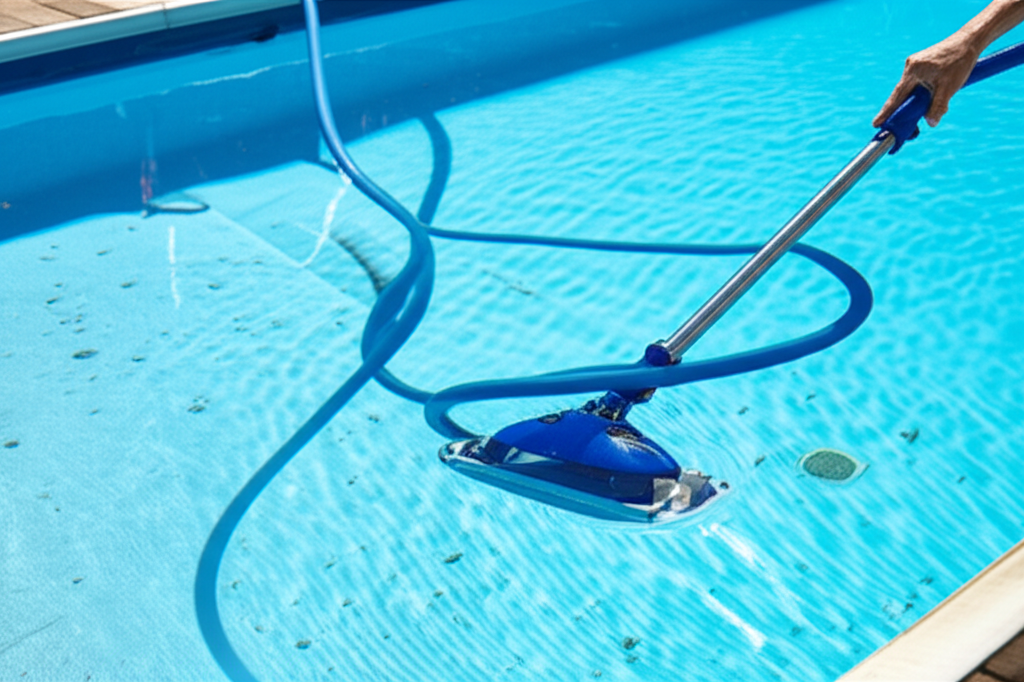
Pool Vacuuming is a fundamental task for maintaining a sparkling, healthy swimming environment. While automatic cleaners handle much of the day-to-day upkeep, understanding the art of manual pool cleaning empowers you to tackle stubborn debris, fine silt, and specific problem areas, ensuring your pool remains a pristine oasis. This comprehensive guide will walk you through everything you need to know, from essential tools to effective techniques, transforming a chore into a straightforward process.
Why Pool Vacuuming is Indispensable for a Pristine Pool
A clean pool isn’t just about aesthetics; it’s about hygiene, water clarity, and the longevity of your pool equipment. Over time, leaves, dirt, sand, insects, and even microscopic particles settle to the bottom. If left unchecked, this debris can:
Impact Water Quality: Decomposing organic matter consumes sanitizers, leading to unbalanced water chemistry and potential algae growth.
Strain Filtration Systems: Excessive debris forces your filter to work harder, reducing its efficiency and potentially shortening its lifespan.
Create Unpleasant Swimming Conditions: Nobody wants to swim in murky water or step on gritty surfaces.
Damage Pool Surfaces: Over time, sharp debris or organic matter can stain or etch pool liners and surfaces.
Regular pool vacuuming removes these contaminants before they become major problems, keeping your water crystal clear and inviting.
Essential Tools for Effective Manual Pool Cleaning
Before you dive in, ensure you have the right equipment. High-quality tools make the job easier and more efficient.
1. Vacuum Head:
Wheeled Vacuum Head: Ideal for concrete, gunite, and fiberglass pools. The wheels prevent scratching and allow smooth gliding.
Brush Vacuum Head: Best for vinyl or delicate plaster pools, as the brushes are gentler on surfaces and help dislodge clinging debris.
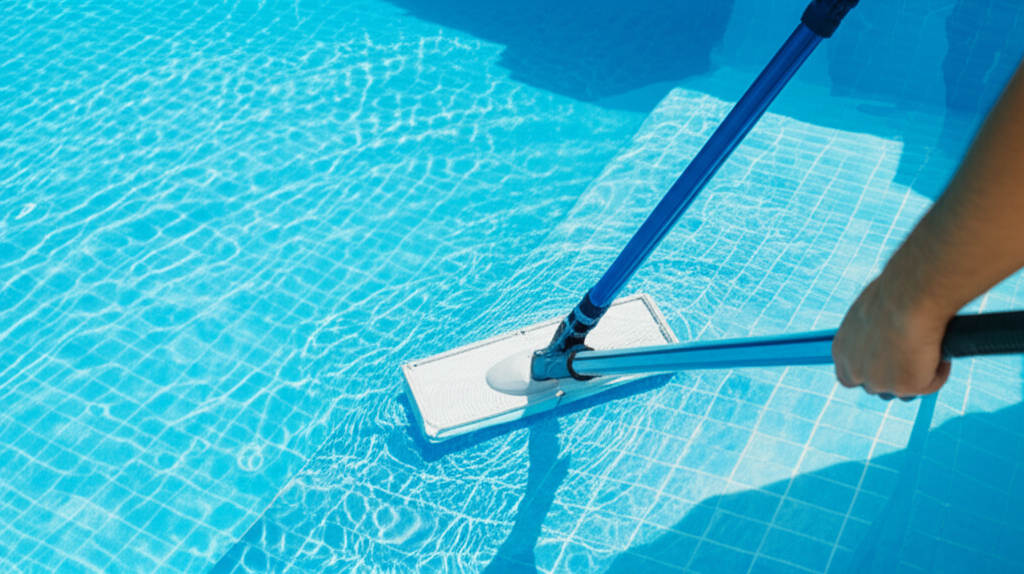
2. Telescopic Pole: An adjustable pole that attaches to your vacuum head, brush, and skimmer net, allowing you to reach all areas of your pool. Ensure it locks securely at desired lengths.
3. Vacuum Hose: A specialized floating hose designed for pool use. It needs to be long enough to reach every corner of your pool from the skimmer inlet.
4. Skimmer Adapter or Vacuum Plate: This connects the vacuum hose to your skimmer, drawing water and debris into your filtration system. Some pools have a dedicated vacuum line.
5. Pool Brush: While not part of the vacuum itself, a good brush is crucial for pre-vacuuming tasks.
6. Skimmer Net (Leaf Rake): For removing large floating debris before you start vacuuming.
Preparing Your Pool for Manual Pool Cleaning
A little preparation goes a long way in ensuring an efficient and effective vacuuming session.
1. Skim the Surface: Use your skimmer net to remove any floating leaves, bugs, or other debris. This prevents your vacuum from getting clogged prematurely.
2. Brush Walls and Floor: With your telescopic pole and a pool brush, thoroughly brush down the walls, steps, and floor of your pool. This dislodges settled dirt and algae, making it easier for the vacuum to pick up. Let the water settle for 15-30 minutes after brushing so the debris can resettle at the bottom.
3. Check Your Filter Setting: For most routine vacuuming, your filter should be set to “Filter.” If you have a significant amount of dirt, algae, or very fine silt, you might consider vacuuming to “Waste” (backwash) to bypass the filter and expel the dirty water directly. Be mindful that vacuuming to waste will lower your pool’s water level, so have a hose ready to refill.
4. Prime Your Pump: Ensure your pump basket is clean and full of water.
Step-by-Step Guide to Effective Pool Vacuuming
Now for the main event! Follow these steps for a clean and sparkling pool:
1. Assemble Your Equipment: Attach the vacuum head to one end of your telescopic pole.
2. Connect the Hose: Connect the appropriate end of your vacuum hose to the vacuum head.
3. Submerge and Prime the Hose: This is the most crucial step for creating suction. Slowly lower the vacuum head and hose into the pool. As the head sinks, hold the open end of the hose over a return jet. The pressure from the jet will push water through the hose, forcing all the air out. You’ll see bubbles stop escaping from the vacuum head when the hose is full of water. Alternatively, you can slowly push the hose down into the pool, letting it fill with water as you go. Ensure NO air remains in the hose.
4. Connect to Suction: Once the hose is fully primed, take the open end and quickly connect it to your skimmer adapter or vacuum plate. Then, insert the adapter into your pool’s skimmer opening (or directly into your dedicated vacuum line).
5. Start Vacuuming: With the pump running, slowly move the vacuum head across the bottom of your pool using long, overlapping strokes, similar to how you’d vacuum a carpet.
Be Slow and Gentle: Moving too quickly will stir up debris, making the water cloudy and less effective for pickup.
Overlap Your Strokes: Ensure you cover every inch of the pool floor.
Empty Baskets: If you notice a significant drop in suction, your skimmer basket or pump basket might be full. Turn off the pump, clear the baskets, re-prime the hose, and continue.
6. Disconnect and Clean Up: Once you’ve vacuumed the entire pool, turn off your pump. Remove the hose from the skimmer and disconnect it from the vacuum head. Store your pole, hose, and head in a shaded area away from direct sunlight to prolong their life.
7. Backwash/Clean Filter: After vacuuming, especially if your pool was very dirty, it’s essential to backwash your sand or D.E. filter, or clean/rinse your cartridge filter. This removes the debris trapped by the filter and restores its efficiency.
8. Recheck Water Chemistry: Vacuuming can sometimes affect water levels and chemical balance, especially if you vacuumed to waste. Test your water and adjust chemicals as needed.
Advanced Tips for Peak Pool Vacuuming Performance
Vacuum to Waste for Heavy Debris: If your pool has an extensive amount of dirt, leaves, or algae (especially after a storm or an algae bloom), set your filter valve to “Waste” when vacuuming. This bypasses the filter, sending the dirty water directly out of your pool. Remember to replenish the water level afterward.
Regularity is Key: Aim to manually vacuum your pool at least once a week, or more frequently if your pool sees heavy use, experiences storms, or is surrounded by trees.
Address Cloudy Water: If your water is cloudy, using a clarifier before vacuuming can help tiny particles clump together, making them easier for the vacuum and filter to capture.
* Monitor Suction: A strong, consistent suction is critical. If suction drops, check for clogs in the hose, skimmer basket, or pump basket.
The Rewards of Consistent Pool Vacuuming
While it may seem like an effort, consistent manual pool cleaning provides unparalleled control over your pool’s cleanliness. It allows you to address specific problem areas, fine-tune your cleaning routine, and ultimately extend the life of your pool’s vital components. By following this guide, you’ll not only master pool vacuuming but also guarantee a consistently beautiful, healthy, and inviting swimming experience for you, your family, and your friends. Dive into the satisfaction of a truly pristine pool!