Weak Jets: Effortlessly Boost Pool Circulation
July 17, 2026
Liner Floating: Stunning Fix for Ground Water Threat
July 21, 2026
- What Constitutes an Air Leak in the Suction Line?
- The Hidden Threat: Why Air Leaks Are So Damaging (and Costly)
- How to Identify an Air Leak in Your Suction Line
- Finding the Culprit: Pinpointing Your Air Leak
- Fixing Your Air Leak in Suction Line: A Step-by-Step Guide
- Prevention is Key: Avoiding Future Air Leaks
An air leak in the suction line of your pool system is far more than a minor annoyance; it’s a significant problem that can lead to costly damage to your pool pump and other crucial equipment if left unaddressed. Understanding the signs, causes, and solutions for these leaks is essential for any pool owner looking to maintain a healthy, efficient, and long-lasting pool system. Ignoring the tells of air infiltration can quickly turn a simple maintenance task into an expensive repair or, worse, a full component replacement.
What Constitutes an Air Leak in the Suction Line?
The suction line of your pool system is the network of pipes that draws water from your pool (via skimmers and main drains) to the pump. This creates a vacuum, pulling water into the system for filtration, heating, and circulation. An air leak occurs when this sealed system develops a breach, allowing air to be drawn into the plumbing instead of water. Because the pump is designed to move water, not air, the introduction of air significantly disrupts its operation and places immense strain on its components.
The Hidden Threat: Why Air Leaks Are So Damaging (and Costly)
The consequences of an air leak extend far beyond just noisy operation. The entry of air into the pump’s wet end can lead to a cascade of problems:
1. Cavitation: This is the most destructive effect. When air enters the pump, it forms bubbles that collapse violently as they pass through the impeller. This phenomenon, known as cavitation, creates shockwaves that erode the impeller blades over time, leading to reduced water flow and pressure. The constant impact also strains the motor and can cause critical seals to fail.
2. Pump Overheating and Failure: Air molecules don’t dissipate heat like water. Without a steady flow of water to cool the motor and its seals, these components can quickly overheat. This accelerates wear and tear on bearings, seals, and the motor windings, dramatically shortening the pump’s lifespan and potentially leading to catastrophic failure.
3. Reduced Filtration Efficiency: With air in the system, the pump’s ability to pull water through the filter is compromised. This can result in cloudy water, increased chemical usage, and the proliferation of algae, forcing your filter to work harder and less effectively.
4. Increased Energy Consumption: A pump struggling with air is an inefficient pump. It has to work longer and harder to achieve the desired circulation, leading to higher electricity bills without delivering optimal performance.
5. Difficulty Priming The Pump: Air leaks can make it challenging, if not impossible, for your pump to prime initially or re-prime after backwashing or servicing. This means your pool isn’t circulating, and stagnant water issues can arise.
How to Identify an Air Leak in Your Suction Line
Catching an air leak early can save you significant time and money. Here are the tell-tale signs to look for:
Bubbles from Return Jets: This is often the most obvious sign. If you see streams of small bubbles continuously flowing from your pool’s return jets, it strongly indicates air is entering the system before the pump.
Air in the Pump Basket: Regularly check your pump’s clear lid. If you see air churning within the pump basket, or if it doesn’t stay completely full of water, an air leak is present.
Strange Pump Noises: A healthy pool pump typically hums quietly. If you hear grinding, gurgling, rattling, or a high-pitched whine, especially when the pump runs, it could be struggling against air.
Difficulty Priming: If your pump repeatedly loses prime or takes an unusually long time to prime after being started, an air leak is a likely culprit.
Inconsistent Pressure Gauge Readings: While not always solely due to air leaks, erratic or unusually low pressure readings on your filter gauge can sometimes point to air infiltration.
Low Water Flow: A general decrease in the strength of water returning to the pool, or less effective skimming action, can signify reduced pump efficiency due to air.
Finding the Culprit: Pinpointing Your Air Leak
Once you suspect an air leak, the next step is to locate its source. Air leaks typically occur on the suction side, which is everything from the skimmer and main drain up to the pump’s impeller housing.
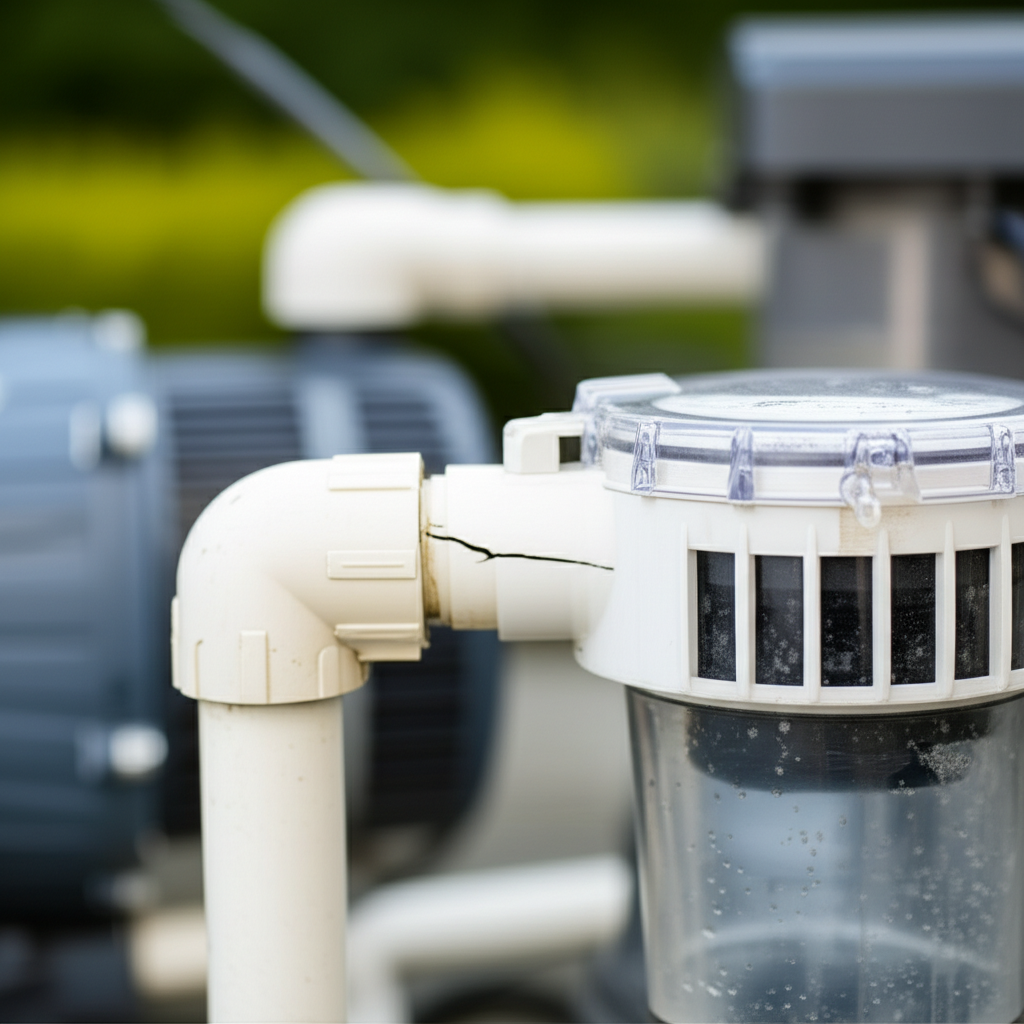
1. Visual Inspection: Start by visually inspecting all components on the suction side. Look for cracks in the skimmer housing, main drain covers, and the pipe leading to the pump. Check the pump lid’s O-ring for dryness, cracks, or improper seating. Tighten all unions and fittings leading into the pump.
2. The Shaving Cream/Soapy Water Test: With the pump running, apply shaving cream or thick soapy water to suspected leak areas (pump lid, fittings, unions, valve stems). If an air leak is present, the suction will draw the cream or soap into the crack or gap.
3. Water Hose Test: This method is effective for identifying leaks above the water line. Turn off the pump. Get a garden hose and direct a stream of water over suspected areas (e.g., around the pump lid, threaded fittings, valve stems). If an air leak is present, the water will momentarily block the air entry, and you might see the bubbles stop or hear a change in the pump’s sound when you restart it (though be careful not to run the pump dry for too long).
4. Skimmer Line Isolation: You can often isolate leaks by observing the bubble output when running only one skimmer, or only the main drain, if your system allows. This can help narrow down if the leak is in a specific skimmer line.
Fixing Your Air Leak in Suction Line: A Step-by-Step Guide
Once identified, addressing an air leak is crucial. The repair method depends on the source:
Pump Lid O-Ring: This is a common culprit. Turn off the pump. Remove the lid, clean the O-ring groove, inspect the O-ring for cracks or flattening, and lubricate it with a silicone-based lubricant (never petroleum jelly as it can degrade rubber). Replace the O-ring if damaged. Ensure the lid is seated correctly and tightened securely.
Drain Plugs: Check the drain plugs on the front of the pump and apply Teflon tape or sealant, or replace the O-rings/gaskets if they are worn.
Threaded Fittings and Unions: Turn off the pump. Disassemble the fitting, clean the threads, apply new Teflon tape or pipe dope, and re-tighten. For unions, ensure the gasket is clean and intact.
Valve Stems: If you have multi-port valves or slide valves on your suction side, ensure they are not leaking. Sometimes a simple tightening or replacement of an O-ring or spider gasket is needed.
Cracked Pipes: For PVC pipes, this usually requires cutting out the damaged section and replacing it with new pipe and couplings, using PVC primer and glue. For skimmer cracks, a marine-grade epoxy specific for wet environments might offer a temporary fix, but often requires a more extensive repair or replacement.
Low Water Level: Ensure your pool’s water level is always at least half-way up the skimmer opening. If the water level is too low, the skimmer will draw in air.
Prevention is Key: Avoiding Future Air Leaks
Regular maintenance can prevent many air leak issues:
Annual Inspections: Take the time to visually inspect all your pool plumbing and pump components before and during the season. Look for signs of wear, cracks, or loose fittings.
Lubricate O-Rings: Routinely lubricate the pump lid O-ring and any major union O-rings on the suction side to keep them pliable and ensure a tight seal.
Proper Winterization: If you winterize your pool, ensure all lines are properly blown out and sealed according to local guidelines to prevent freeze damage that can crack pipes and fittings.
Maintain Water Levels: Always keep your pool’s water level at an appropriate height to prevent the skimmer from sucking air.
Addressing an air leak in the suction line promptly is paramount to maintaining a healthy, efficient, and cost-effective pool system. By understanding the signs, diligently searching for the origin, and making timely repairs, you can safeguard your pool pump from premature failure and ensure many seasons of trouble-free enjoyment.