Pool Loans: Best Effortless Financing Options
May 8, 2026
Hillside Pool: Best, Must-Have Sloped Yard Pool
May 12, 2026
- Why Consider Building Your Own Pool with a DIY Kit?
- Exploring the World of DIY Pool Kits
- What's Typically Included in a DIY Pool Kit?
- The Journey of Building Your Own Pool
- Challenges and Considerations
- Is a DIY Pool Kit Right for You?
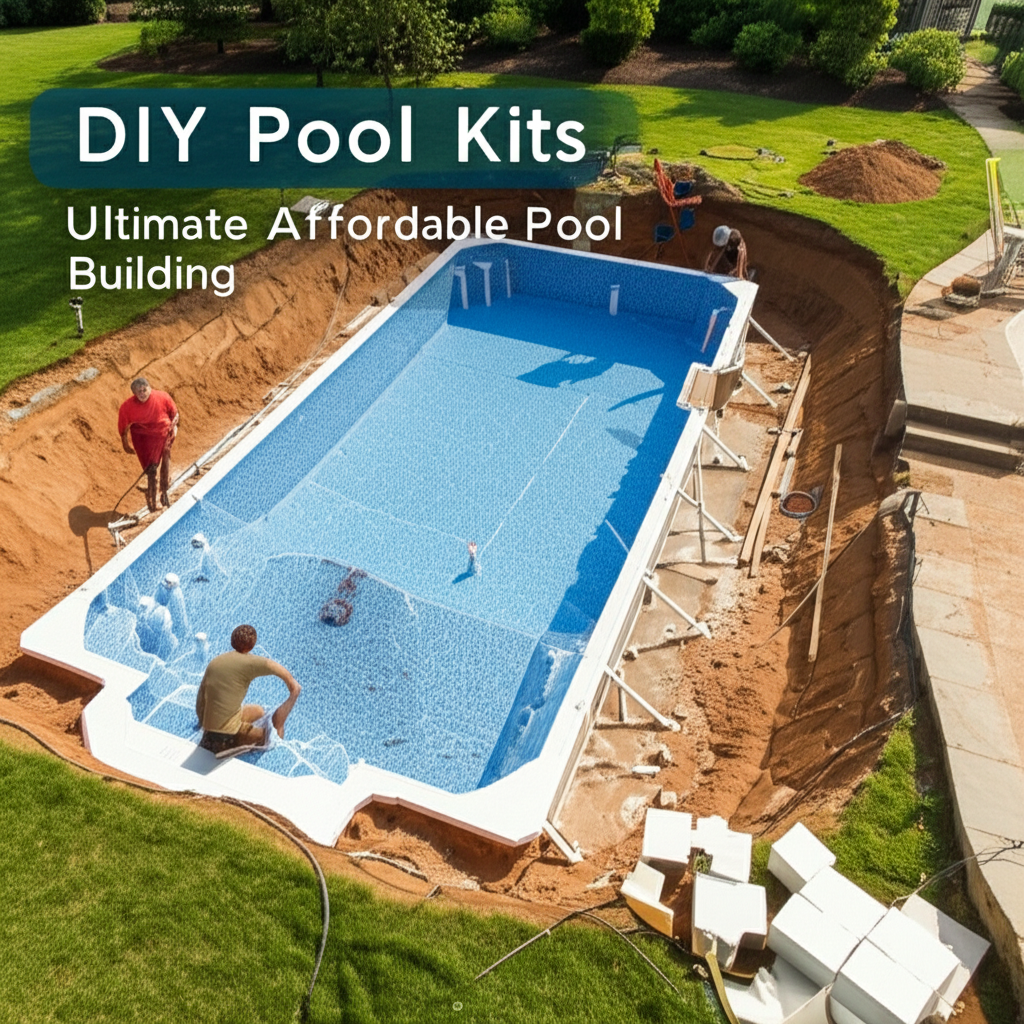
DIY Pool Kits represent a revolutionary way for homeowners to achieve the dream of backyard swimming without the traditionally colossal price tag. For years, the idea of owning a pool was synonymous with a significant financial outlay, often placing it out of reach for many families. However, with the advent of comprehensive do-it-yourself pool kits, that barrier has been dramatically lowered, making accessible luxury a reality for the motivated homeowner. This approach empowers individuals to take control of their project, offering not just cost savings but also a deep sense of accomplishment.
Why Consider Building Your Own Pool with a DIY Kit?
The allure of Building Your Own Pool extends far beyond mere financial savings. While cost-effectiveness is undoubtedly a primary driver, DIY pool kits offer a unique blend of benefits that traditional pool construction simply cannot match:
1. Unbeatable Affordability: This is perhaps the most compelling advantage. By eliminating professional labor costs – which can account for 30-50% or more of a traditional pool installation – DIY kits allow substantial savings. You’re primarily paying for materials and equipment, drastically reducing the overall investment.
2. Customization and Control: While standardized, many kits offer a surprising degree of customization. You choose the size, shape, liner pattern, and often have control over ancillary features like decking, lighting, and landscaping. This means your pool can truly reflect your personal style and fit your backyard’s unique dimensions.
3. The Satisfaction of Creation: There’s immense pride in stepping back and admiring a project you’ve completed with your own hands. Building your own pool creates a lasting memory and a personal connection to your outdoor oasis.
4. Flexible Timeline: Unlike a professional crew working on a tight schedule, a DIY project allows you to work at your own pace. You can spread the work out over weekends or coordinate with your own contractors for specific tasks like excavation or electrical work, fitting the project into your life rather than disrupting it.
Exploring the World of DIY Pool Kits
For those contemplating the DIY route, it’s essential to understand the different types of DIY Pool Kits available, as they vary significantly in complexity, cost, and final appearance.
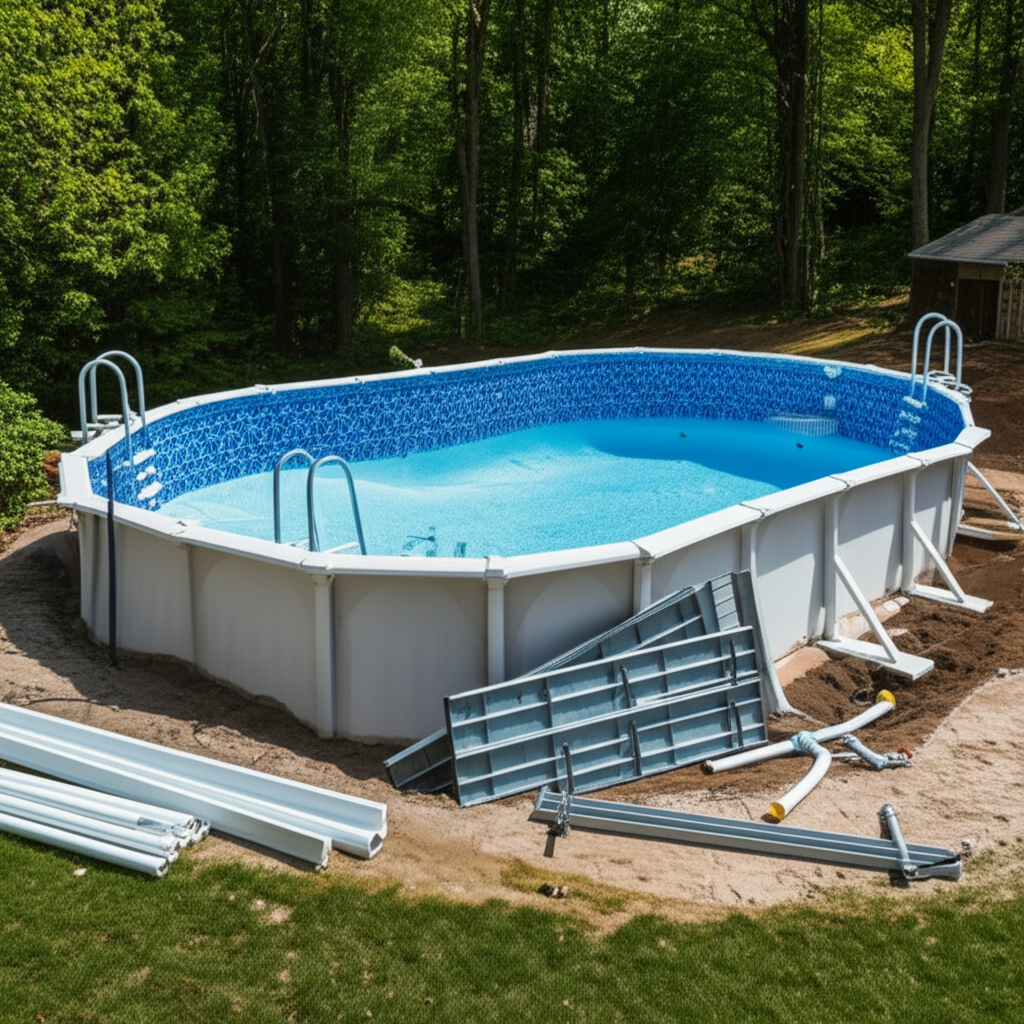
Above-Ground Pool Kits: These are the simplest and most budget-friendly option. They involve assembling a wall structure (often steel or resin) and installing a vinyl liner. They sit entirely on top of the ground and are relatively quick to install, often requiring only a level surface.
On-Ground Pool Kits: A step up from above-ground, these offer a more integrated look. While still sitting on the ground, their robust construction (often incorporating steel or aluminum walls) allows for partial excavation and surrounding deck integration, giving them an appearance closer to an in-ground pool, albeit at a lower price point.
In-Ground Pool Kits: These are for the ambitious DIYer aiming for the quintessential backyard pool experience.
Steel Wall Kits: These typically involve galvanized steel wall panels that bolt together to form the pool’s shape. They are robust, durable, and come with comprehensive instructions for excavation, wall assembly, plumbing, and liner installation.
Polymer Wall Kits: Similar to steel walls but made from high-strength structural polymer. These are rust-proof, lightweight, and often easier for a DIYer to handle. They offer excellent insulation properties, which can translate to lower heating costs.
Each type comes with a kit designed to provide the core components needed to create a functional pool structure.
What’s Typically Included in a DIY Pool Kit?
While contents can vary by manufacturer and pool type, a standard DIY pool kit usually contains the foundational elements necessary to construct your pool:
Pool Walls/Structure: The main framework, whether steel, polymer, or another material, along with necessary bracing and hardware.
Vinyl Liner: Custom-fit to the pool’s dimensions and shape, available in various patterns and thicknesses.
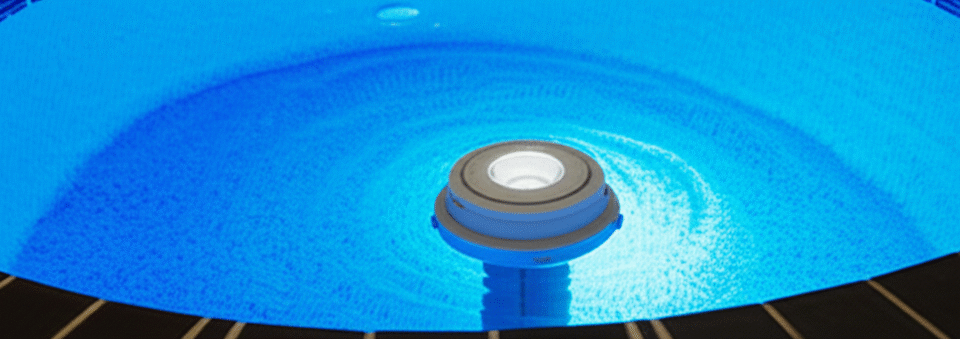
Skimmer and Returns: Essential plumbing fixtures for water circulation and debris removal.
Main Drain: For bottom water circulation and draining the pool.
Complete Plumbing Kit: All necessary pipes, fittings, and connectors to link the skimmer, returns, and main drain to the filtration system.
Pump and Filter System: The heart of your pool’s sanitation, often a sand, cartridge, or DE filter paired with an appropriately sized pump.
Instruction Manuals and Technical Support: Detailed guides and access to support ensure you’re never entirely alone in the building process.
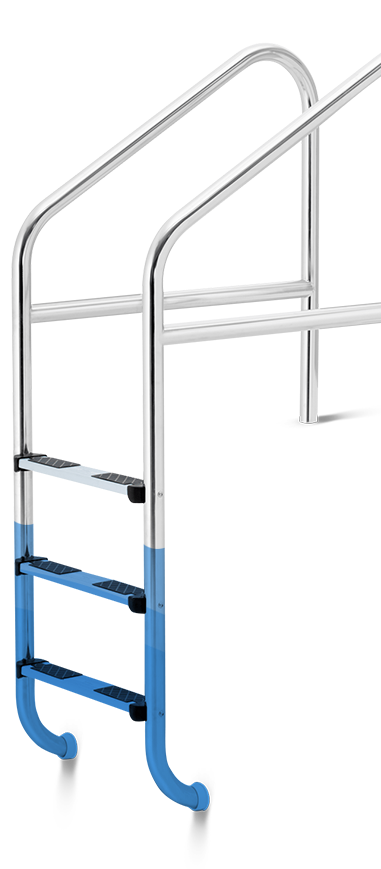
Often, steps, ladders, lighting, and sanitation systems (like salt chlorine generators) might be optional add-ons or separate purchases, allowing further customization of your build.
The Journey of Building Your Own Pool
Embarking on Building Your Own Pool with a DIY kit is a multi-step process that requires careful planning, patience, and a willingness to learn.
1. Permitting and Planning: This crucial first step involves researching local building codes and securing all necessary permits. Incorrect permits can lead to costly delays or fines. Also, plan your layout, considering sun exposure, utility lines, and landscaping.
2. Excavation and Site Preparation: For in-ground pools, this involves digging the hole to the exact specifications provided by the kit. For above-ground, it’s about leveling the site. This often requires heavy machinery, either rented or hired out.
3. Base and Wall Assembly: Once the ground is ready, you’ll prepare the pool base (often a mixture of sand and cement for compaction), then assemble the pool walls according to the instructions, ensuring they are level and plumb.
4. Plumbing and Electrical: Install the skimmer, returns, main drain, and run the plumbing lines to the filter area. Electrical work for the pump, lighting, and any heating systems must be done by a licensed electrician to ensure safety and compliance.
5. Backfilling and Decking: For in-ground pools, the space around the walls is backfilled. This is also the stage where decking, patios, or coping stones are installed around the pool’s perimeter.
6. Liner Installation: This delicate step involves carefully spreading and securing the vinyl liner into the pool structure, often with the help of a powerful vacuum to remove air and press it firmly against the walls before filling with water.
7. Filling and Commissioning: Once the liner is in place, the pool can be filled. After filling, the pump and filter system are started, chemicals are balanced, and the pool is ready for its inaugural swim.
Challenges and Considerations
While the rewards are great, DIY Pool Kits are not without their challenges. It’s a significant undertaking that demands:
Time Commitment: Expect many hours of physical labor. This isn’t a weekend project.
Physical Demands: Heavy lifting, digging, and working with tools are integral parts of the process.
Renting Equipment: You’ll likely need to rent an excavator, plate compactor, and other specialized tools.
Attention to Detail: Precision is key, especially during excavation, wall assembly, and liner installation. Errors can be costly and difficult to correct.
Understanding Instructions: The ability to follow complex technical instructions is paramount.
Subcontracting: You may need to hire professionals for certain tasks, like complex electrical wiring, gas line installation for heaters, or large-scale excavation if you’re not comfortable operating heavy machinery.
Is a DIY Pool Kit Right for You?
Deciding whether to take on Building Your Own Pool involves an honest self-assessment. Do you have the time, the physical capability, a knack for following instructions, and a good dose of patience? Do you enjoy hands-on projects and solving problems? If the answer is yes, then a DIY pool kit can be an incredibly rewarding and cost-effective path to pool ownership. It transforms a daunting project into an achievable goal, culminating in a beautiful backyard oasis built by your own hands.
In conclusion, DIY Pool Kits have democratized pool ownership, making it possible for a wider audience to enjoy the luxury and benefits of a backyard swimming pool. With careful planning, diligent effort, and adherence to instructions, you can transform your backyard into the ultimate retreat, proving that paradise doesn’t always have to come with a prohibitive price tag.